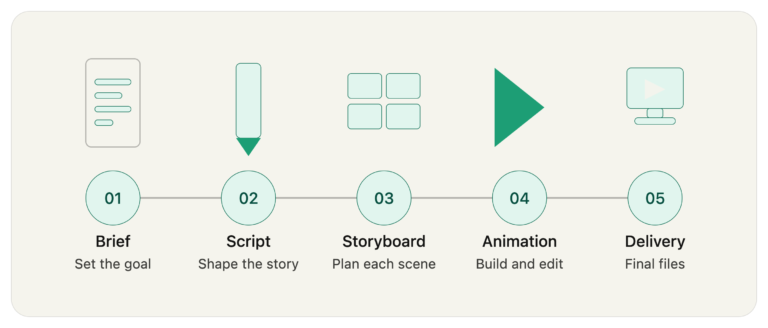
Writing an effective video production brief is essential to ensuring your project stays on time and within budget while meeting its strategic goals. If you’re new to the creative process, a production brief summarises the client’s needs and objectives for their video, which is then presented to the production team. The team creates a proposal based on the information provided, and once the client signs off, the project can begin.
The key to the perfect brief? More is more. Even if you think you’re going overboard on the details, you can never provide too much instruction. Always give as much information as possible to keep everyone on the same page.
What’s a Video Production Brief?
A video production brief is the document that aligns client intent with production execution before a single frame is shot. Think of it as the single source of truth that every creative and technical decision gets measured against.
It serves a different purpose on each side of the table. For the client, it forces clarity by surfacing assumptions, gaps, and conflicting priorities before they become expensive problems. For the production team, it removes guesswork and gives the crew a creative foundation to work from rather than a direction to guess at.
Without a solid brief or with a weak one, the consequences are well documented. The project could expand beyond what anyone agreed to, creative misalignments can emerge when it’s too late and too costly to fix, budgets can spiral, timelines can slip, and everyone ends up frustrated at an outcome that could’ve been avoided.
How to Build Your Video Production Brief
This is a five-step framework to be worked through sequentially. Every section builds on the last, and skipping steps creates gaps that tend to surface later as exactly the kind of problems a brief is meant to prevent.
1. Lock In the Project Foundation
Start with the fundamentals before anything else. Your project overview should answer three things:
- What the video is
- Why is it being made
- What business moment is driving it, e.g., a product launch, a campaign refresh, or an internal communications push
From there, define what success actually looks like. Is it views, leads, brand awareness, internal alignment, or something else entirely? Vague objectives produce vague videos.
Next, identify your audience insight. This includes who’s watching, what they already know, and what you need them to feel or do after watching. And be clear about stakeholders up front, including who has input, who has final sign-off, and how decisions are made. Getting this on paper early prevents the late-stage chaos of a new opinion appearing in round four of revisions.
2. Shape the Creative Direction
Your creative brief template should nail down the core message, the tone, and any conceptual direction you already have in mind for your video. Remember, one clear message beats three competing ones every time.
Include your brand and legal requirements here, such as logos, colour palettes, music licensing restrictions, compliance considerations, and any mandatory disclaimers. These aren’t afterthoughts; they’re constraints the creative team needs to design around from the start.
This is also the stage to share reference videos, mood boards, or campaigns you admire, but explain what you actually like about them.
3. Define the Deliverables and Distribution
This is where many generic creative video brief templates fall short. Be specific about formats, aspect ratios, lengths, and the number of versions required. A 16:9 hero video, a 9:16 social cut, and a 60-second recap are distinct deliverables and need to be scoped accordingly.
Include technical specs, such as platform requirements, file format, resolution, and caption requirements. These details directly affect the video production process and need to be locked in before post-production begins, not flagged as an afterthought on delivery day.
Your distribution plan matters too. This includes where the video will live and how it’ll be promoted, which directly informs creative decisions made on set.
Finally, map out the timeline. Work backwards from your go-live date and flag any hard deadlines tied to events, campaigns, or board presentations.

4. Set the Range and the Priorities
One of the most common mistakes clients make is withholding budget in the hope of getting a better price. It doesn’t work that way. Being realistic about the cost of your video from the outset allows the production team to design a scope that truly fits your reality.
Your brief should also state budget priorities. If trade-offs are needed, where should the money go? Production quality, on-screen talent, post-production finishing, or original music? Knowing this helps the team make smart recommendations rather than guessing at what matters most to you.
5. Surface Constraints Early
Every project has constraints. A good video brief template surfaces them before they surprise the crew on shoot day.
Document location restrictions, access limitations, and scheduling conflicts that could affect production. Note any on-screen talent preferences, whether you’re using internal staff or hiring talent, and flag any spokesperson considerations the team should plan around.
If you’ve had previous production experiences, good or bad, share them. Whether it’s corporate video services that nailed your brand tone or a live streaming shoot that ran over schedule, context like this helps a production team understand how to work with you, not just for you.
A Brief That Works Does Half the Job for You
A well-built video brief template isn’t admin. It’s a strategy. The time you invest in it upfront comes back in fewer revision rounds, sharper creative, and a production team that can hit the ground running on day one.
If you’d like help building your next video project or reviewing your video brief template before going into production, that’s exactly the kind of conversation we have at Graphiss Media. We work as a collaborative partner from day one, not just an execution team, and we’d rather ask the right questions early than fix the wrong decisions later.
Whether you’re planning seminar-event videography or a full-scale brand campaign, contact us to build your brief together.