Some ideas are difficult to film. A software workflow, a financial model, an organisational process that lives entirely in the abstract. Point a camera at any of those and you’ll come up short. Motion graphics video is built for that gap. It is animated visual content made from moving text, icons, shapes, and graphic elements, used to explain ideas and tell stories without live-action footage or character-driven animation. The simplest way to think about it: graphic design that has learned to move. For B2B brands, it answers a challenge live-action cannot, making the abstract concrete, the complex simple, and the intangible visible.
What Is Motion Graphics?
At its core, motion graphics is graphic design set in motion. A static infographic lays everything out at once and asks the viewer to find their own way through it. A motion graphic takes that same information and moves it, giving the message sequence, pacing, and a visual hierarchy that guides the eye from one point to the next.
It helps to be clear about what motion graphics isn’t. It’s not character animation, with story-driven characters and narrative worlds. It’s not live-action, with cameras, talent, and physical locations. And it’s not slideshow-style video, which shuffles content across the screen with no real design thinking or motion logic behind it.
A motion graphics video is usually built from a handful of core elements:
- Animated typography that brings words and headlines to life
- Moving icons and illustrations that carry the visual story
- Kinetic data visualisation that turns numbers into something watchable
- Branded transitions that hold the whole piece together
- Visual sequences choreographed to a voiceover, a music track, or both
The reason the format exists is straightforward. Some ideas simply cannot be filmed. A software workflow, a financial model, a data story with a dozen moving parts. A camera can’t capture any of those clearly. Motion graphic design can.
Types of Motion Graphics Videos

Motion graphics covers a family of formats, each suited to a different kind of message and a different kind of viewer. Some are built for speed and scroll-stopping impact. Others are built for depth. These are the ones B2B brands reach for most.
- 2D Motion Graphics: The most common style by far. Flat animated shapes, icons, and text working together in a two-dimensional space. Versatile, cost-effective, and used everywhere from explainer videos to social content and brand animations. For most B2B advertising and marketing, this is the default choice.
- Kinetic Typography: Text-led motion graphics where the words themselves become the visual story. Strong for product messaging, campaign statements, and social content where the copy is doing the heavy lifting.
- Data Visualisation and Infographic Animation: Numbers, statistics, and dense information turned into animated charts, graphs, and comparisons. This is the format most likely to make a CFO stop scrolling, because it makes complicated information scannable at speed.
- 3D Motion Graphics: Three-dimensional animated design. It costs more and takes longer, but the visual impact sits in another league. Best suited to product reveals, brand films, and work where visual sophistication is part of the message.
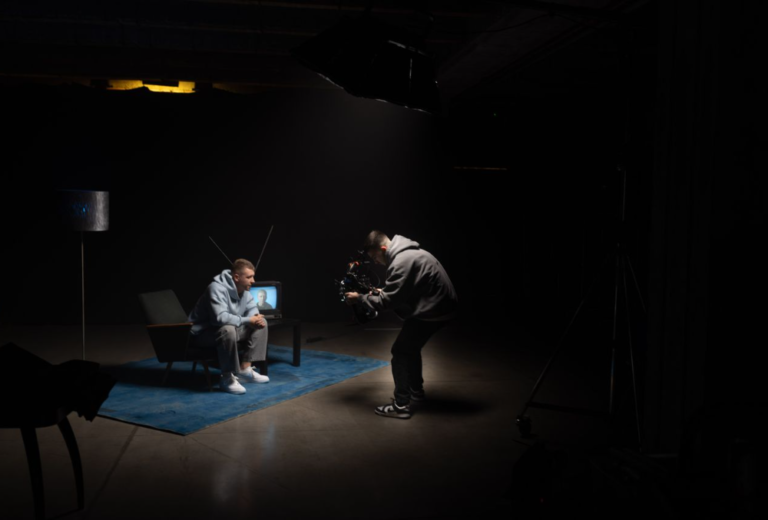
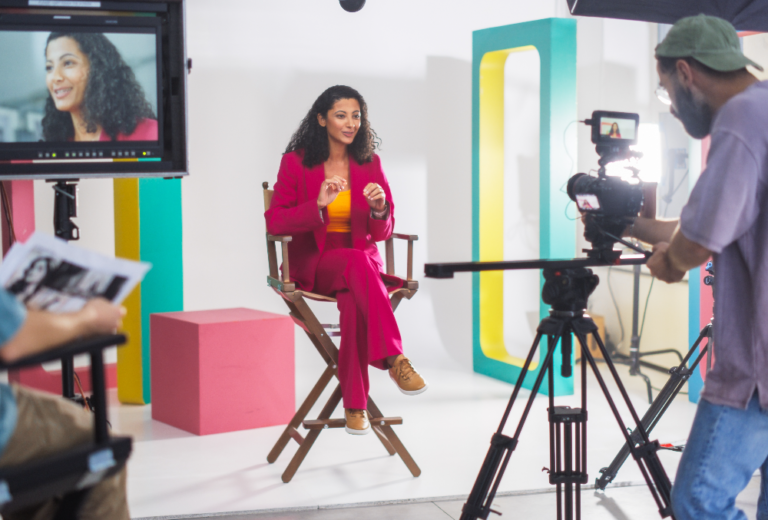
- Motion Graphics With Live-Action Integration: The hybrid format – filmed footage combined with animated overlays, lower thirds, branded text, and graphic elements. This is the most common format in corporate video. Most video production houses already include motion graphics, even if the client never thinks of them that way.
Motion Graphics in Advertising and Marketing
It’s tempting to file motion graphics under explainer videos and leave it there. That undersells it. Motion graphics work across the entire funnel, doing a different job at every stage of how a buyer moves from first glance to signed contract:
- Awareness: Short-form motion graphics on LinkedIn and social media introduce a brand, make a bold statement, and stop the scroll. Kinetic typography and data visualisation clips do especially well here, because they land the message even when the video is watched on mute.
- Consideration: Explainer videos and product demos built on motion graphic design are the most reliable way to communicate a complex B2B proposition. They show how something actually works, whether that is a process, a platform, or a product, in a way a corporate talking-head never quite manages.
- Conversion: Drop motion graphics into a sales deck, a landing page, or a pitch presentation and you give the buyer a visual anchor for the proposal. A sharp animated summary of a service or methodology does quiet pre-qualification work before the first meeting even happens.
- Retention and Internal Comms: Onboarding videos, training sequences, and internal communication animations are where most organisations leave value on the table. The format is ideal for standardising a message at scale, so every employee sees the same clear, well-produced explanation rather than a different version from a different manager.
Motion Graphics vs Live-Action Video: Which Does Your Brand Need?
Across most industries, B2B brands operating at any scale use both motion graphics and live-action video. The useful question is what each format does well, and which communication job it suits best.
Motion graphics tends to win when:
- The product, service, or process has no physical form to put in front of a camera
- Abstract, data-heavy, or technically complex concepts need to be made clear
- Content has to be updated regularly without the cost of booking a reshoot
- Budget or logistics make a full live-action production impractical
- The video needs to work with the sound off, the way most social content is watched
- Visual consistency across a whole library of assets matters to the brand
Live-action tends to win when:
- The goal is to build trust through human presence, like a founder story, a client testimonial, or a team culture film
- A real product or environment is the story, and filming it beats illustrating it
- The brief calls for emotional resonance that only real faces and real voices can deliver
Then there is the case that covers most corporate video in practice: the hybrid. A live-action shoot with motion graphic overlays, branded lower thirds, animated transitions, and a graphic end card. For B2B brands that need credibility and clarity in the same piece, this blend is often the strongest performer of all.
Motion Graphics Examples
Sometimes the format explains itself better than any description can. Here are a few examples of motion graphics work in action.
Does Your Brand Need Motion Graphics Video?
Very few B2B companies sit down and pick motion graphics instead of everything else. They build a content library, and motion graphics earn their place in that library by doing the jobs the other formats cannot. When you need to explain a process, make sense of your data, or get a complex idea across quickly and clearly, it’s hard to beat.
At Graphiss Media, motion graphics and animation are one of the things we do best. Our motion graphics services handle the full scope of motion graphic design, from 2D animation and kinetic typography to 3D sequences and live-action integration, with the entire production kept in-house and a dedicated point of contact guiding you from brief to final file. If you’re weighing up which formats actually fit your next project, get in touch and we’ll help you work it out.