Most brand films get judged by the wrong yardstick. Someone commissions one, waits for the clicks and conversions to roll in, and quietly files it under “expensive vanity project” when they don’t arrive. The problem isn’t the film. It’s the expectation.
A brand film was never built to sell a product in ninety seconds. It exists to make people feel something about a company long before they’re ready to buy, and that is work no product video, testimonial, or social post can do in its place. Yet most businesses either dismiss the format outright or commission one without a clear sense of where it belongs.
What Is a Brand Film?
Strip away the gloss and a brand film has a single job: to tell people who you are. Not what you sell, and not how your product works, but the company behind all of it. That distinction changes how the film should be made, how long it should run, and where it should live.
- A Definition Worth Getting Right: A brand film is a short-to-medium-length video built to communicate a company’s values, personality, and reason for existing rather than its product catalogue. The subject is the brand itself, and everything on screen serves that.
- Not The Format Beside It: A brand film borrows from the product explainer, the company overview, and the campaign ad, but it is none of them. Elements of all three can live inside one, yet its purpose sits above selling a feature or announcing a promotion.
- Where It Sits In The Funnel: Brand films do their best work at the awareness and consideration stage, building emotional affinity while the audience is still a long way from a purchase decision. They warm the ground rather than close the deal.
Types of Brand Films
Not every brand film is chasing the same outcome. Some are built to last for years, some to capture a single moment, and some to answer the quiet question sitting behind every serious purchase. Three types come up most often:
- The Evergreen Story Anchor: The foundational brand film, built to last two to three years without dating. It tells the company’s core story of who they are, why they exist, and what they stand for. It lives on the homepage, plays at events, and gets sent to new prospects. This is the version most clients mean when they say they need a brand film.
- The Big Brand Moment: Built around a specific milestone such as a rebrand, a product launch, an anniversary, or a market expansion. It has a shorter shelf life than the evergreen anchor but earns more attention because it’s pegged to something happening right now. Production ambition often runs higher here, because the moment asks for it.
- The Why Behind The What: A values-led film that answers the question behind every B2B decision, which is whether these are people worth trusting. It cares less about company history or product range and more about the beliefs that drive how the work gets done. Particularly effective for professional services, agencies, and any brand where the relationship matters as much as the deliverable.
Why Brand Films Work
Brand films work because B2B buyers are still human beings making decisions under uncertainty, and trust gets built faster through story than through a specification sheet. A list of features tells someone what you do. A well-told story tells them why it matters, and that lands somewhere a bullet point can’t reach. There’s a mechanism behind this. Narrative activates memory and emotion in a way that feature lists never manage, which is why an audience will remember how a film made them feel long after they’ve forgotten a single detail of what it actually said.
This is also where brand films pick up an unfair reputation. They’re genuinely hard to tie to a direct conversion, and that’s the point rather than the flaw. Their job is the long game, quietly making a company the obvious choice for the day a buyer is finally ready to move. The evidence supports the approach too. Companies that invest consistently in brand storytelling tend to outperform on brand recall, consideration, and long-term growth, not because one film worked magic, but because being remembered compounds.
Core Elements of an Effective Brand Film Strategy
A brand video production in Singapore succeeds or fails long before anyone reviews the final cut. The difference is almost always in the thinking that shapes it. Five elements do most of the heavy lifting:
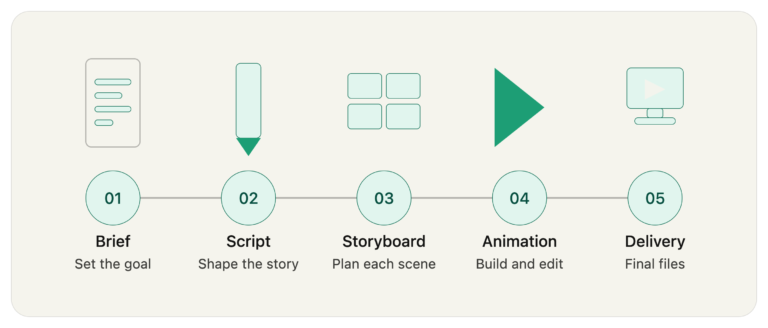
- Clarity of Purpose Before Camera: The brief has to answer one question first, which is what we want the audience to feel, believe, or do differently after watching. Every other decision follows from that answer, and a film built without it tends to look fine and achieve nothing.
- A Story Worth Telling: The strongest brand films are built around a real tension or transformation. A problem the company exists to solve, a belief that runs against the grain, or an origin that explains everything about how they work. Without that, you have footage rather than a story.
- The Right Length for the Right Platform: A homepage brand film and a LinkedIn brand film are not the same cut. Platform context should shape duration, pacing, and the ratio of emotion to information, because a viewer scrolling a feed and a prospect on your website have arrived in very different frames of mind.
- Consistency with the Wider Brand: Visual language, tone, music, and on-screen talent all need to feel like an extension of the brand the audience already knows. A film that reads as a one-off creative experiment, disconnected from everything around it, does the brand no favours, no matter how good it looks.
- A Distribution Plan that Matches the Ambition: A brand film without a placement plan is a production cost waiting for a return that never comes. Owned channels, paid amplification, event use, and sales enablement all belong in the strategy from day one, not bolted on once the file is delivered.
A Brand Film Is an Investment in Being Remembered
A brand film earns its place in the marketing strategy not by driving immediate clicks, but by doing the one thing most content can’t. It makes an audience feel something about a company before they’ve spent a cent. That work is slower and harder to measure, and it’s also the work that decides who a buyer trusts when the moment to choose finally arrives.
So the useful question was never whether a brand film is worth making. It’s whether the brief, the story, and the distribution plan behind it are strong enough to make it work. Get those right and the film keeps earning its keep for years.
That’s the part we care about most. A good video production house thinks about brand films strategically, not just cinematically, and at Graphiss Media that means working out where yours belongs before we pick up a camera. If you’ve got a story worth telling, bring it to us and we’ll help you find its place.