Most people, when they think about video production, picture the day of filming. The crew on set, the cameras, the talent hitting their marks. That’s understandable. It’s also a relatively small slice of the full process.
The video production process is a structured workflow broken into three stages: pre-production, production, and post-production. The journey begins earlier, at the concept stage, and extends further through to distribution. But the three formal stages are where the work lives and where quality is won or lost.
Understanding the full process matters even if you’re not the one executing it. For marketing managers and communications leads commissioning video content, knowing what happens at each stage makes for better briefs, smoother projects, and stronger results.
What Is the Video Production Process?
Video production is the end-to-end process of creating a video, from the first creative conversation to the final file delivered to a platform. What is the video production process, exactly? Think of it as a pipeline: every stage feeds the next, every decision made early shapes what’s possible later, and every shortcut taken upstream creates a problem downstream.
The three formal stages are pre-production, production, and post-production. Before pre-production begins, a concept takes shape. After post-production wraps, distribution begins. The bulk of the time, the thinking, and the craft sits in between.
Stage 1: Pre-Production
Pre-production starts before any logistics are discussed. It always starts with a concept.
Before a single location is scouted, the most important questions need to be answered.
- What’s this video trying to do? Brand awareness, lead generation, internal communications, recruitment?
- Who’s watching, and what do they need to feel before they reach the end?
- What’s the core idea, the mood, the tone?
These aren’t optional questions. They’re the foundation everything else is built on. Realistic budget parameters are set here too, so creative ambition and production scope are aligned from the start.
This thinking layer is what separates videos that work from videos that look polished but accomplish nothing. Sign off on creative direction before logistics begin. Skipping that step is the single biggest cause of expensive mid-project pivots.
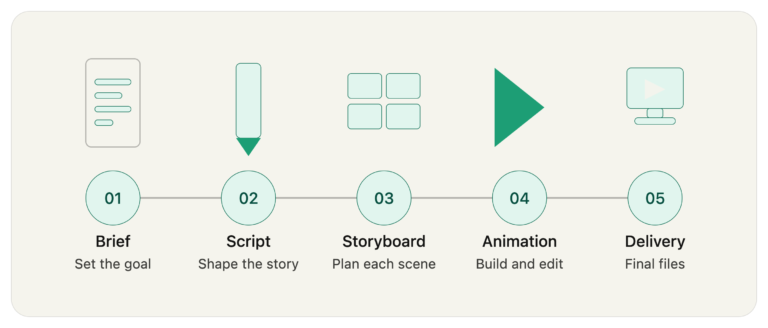
Once the concept is locked, pre-production moves into planning. The video production process steps at this stage include:
- Scriptwriting and revision rounds until the copy reflects the brief and the brand
- Storyboarding and shot list creation so the crew knows exactly what needs to be captured
- Location scouting and permit applications. Some locations in Singapore require several weeks of lead time, particularly for government buildings, public spaces, and commercial properties
- Casting and talent booking, whether that means briefing real staff, hiring professional actors, or engaging a voiceover artist
- Crew sizing and equipment planning are tied to the specific requirements of the shoot, not a generic crew package
- A production schedule that accounts for every shoot day, location, travel time, and key contact
One principle holds across every project: one hour saved in pre-production usually costs three hours somewhere else. Usually in the edit, often on the shoot day, sometimes both.
Stage 2: Production
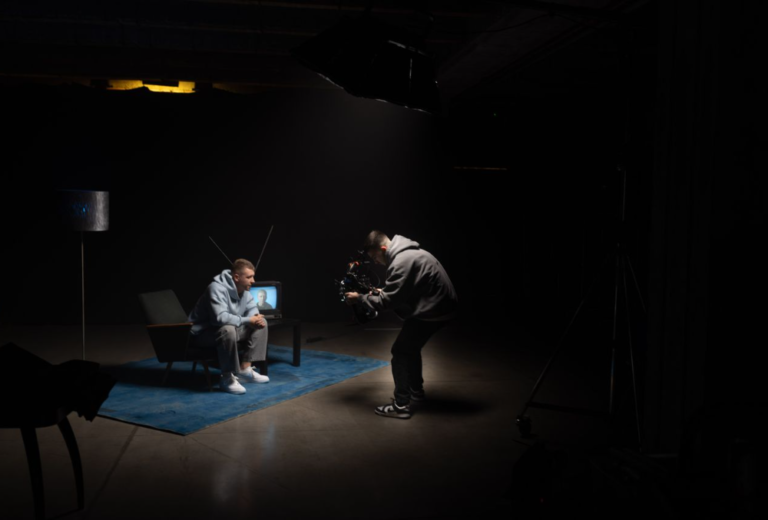
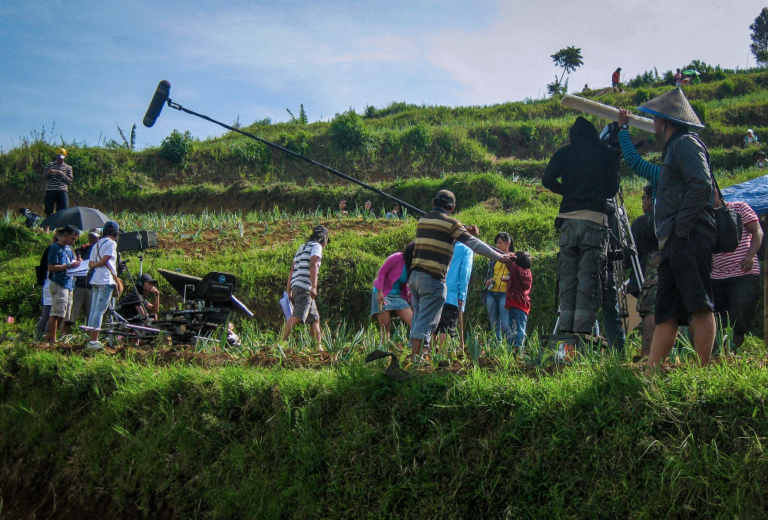
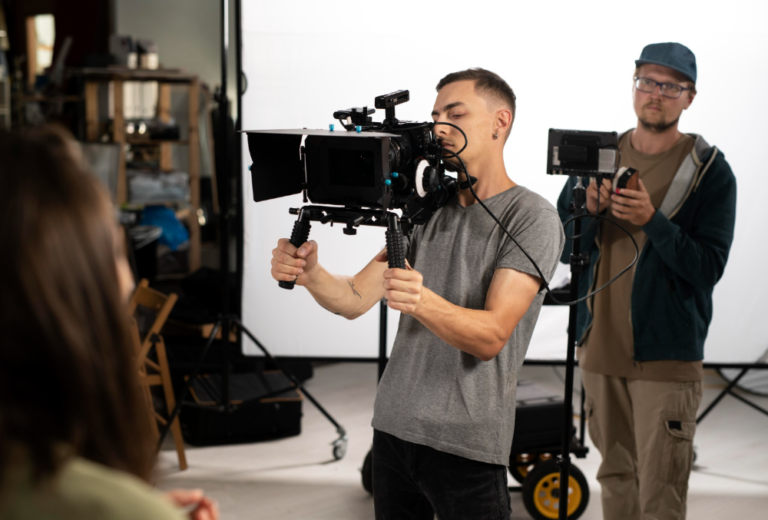
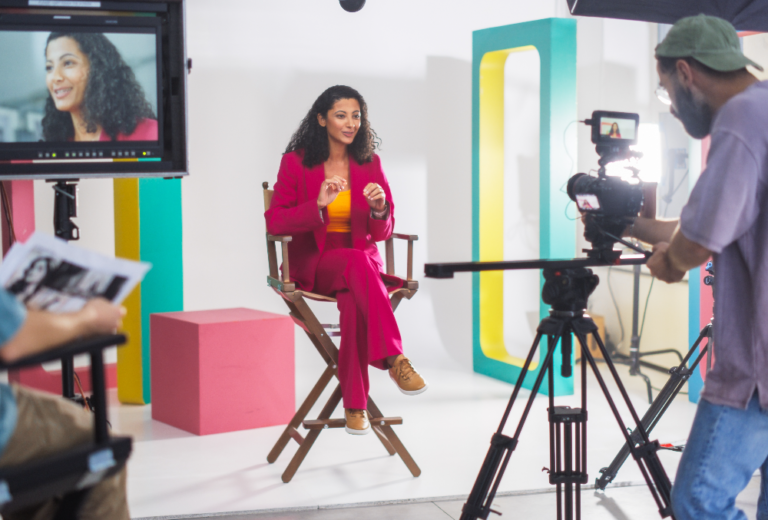
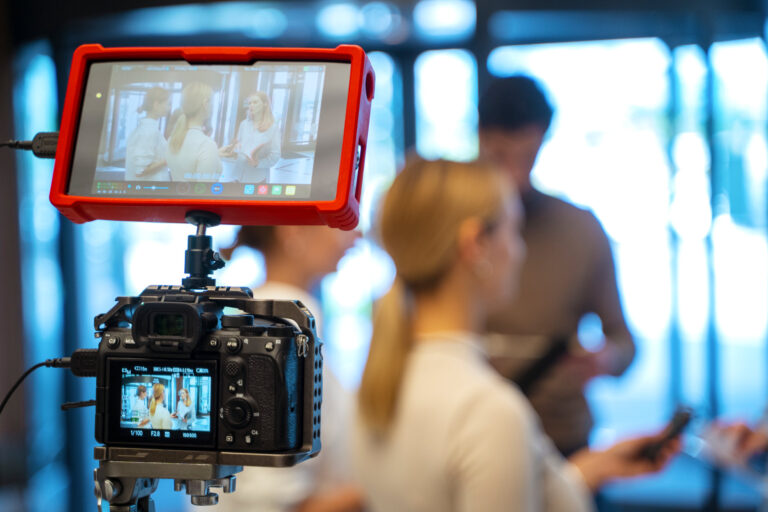
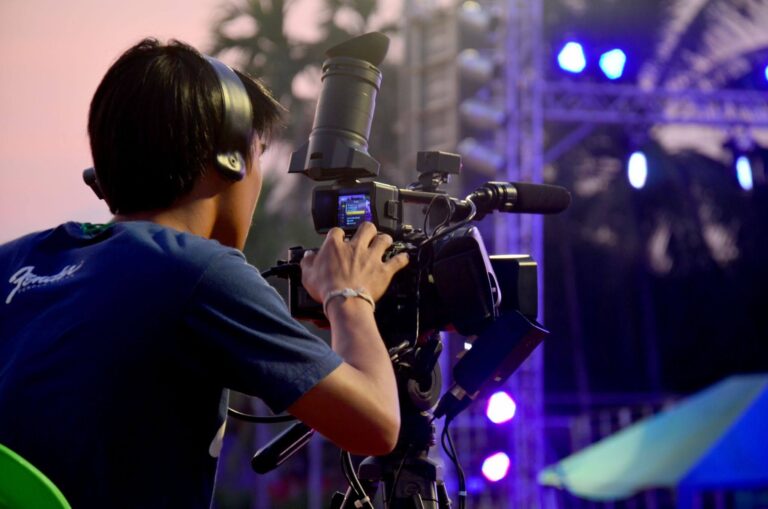
Production is the video shoot itself. If pre-production was thorough, this stage moves quickly. If it wasn’t, the shoot becomes the place where every unanswered question from the planning phase demands an answer in real time, under pressure, with the meter running.
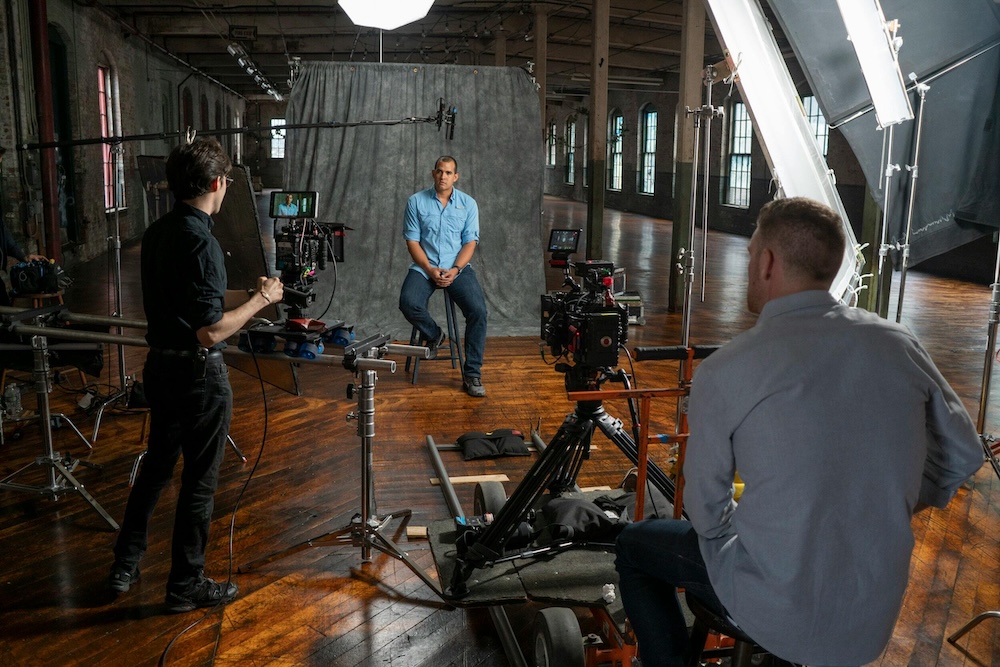
A well-run shoot looks like this. The location is prepared before the talent arrives. Lighting, sound, and camera setups are built to spec. The director works from a shot list, not improvising. An account manager tracks the schedule and keeps the day honest. Continuity is monitored across every scene, particularly on multi-day or multi-location shoots.
Behind-the-scenes footage is captured throughout for future content use. All footage is backed up to multiple drives at the end of each shoot day, without exception.
Production is also where video filming decisions have long consequences in the edit. An unsteady shot, a background element that doesn’t fit the brand, a piece of dialogue delivered inconsistently across takes. These are fixable in theory, and expensive to fix in practice. The shot list isn’t a suggestion. It’s the plan.
Stage 3: Post-Production
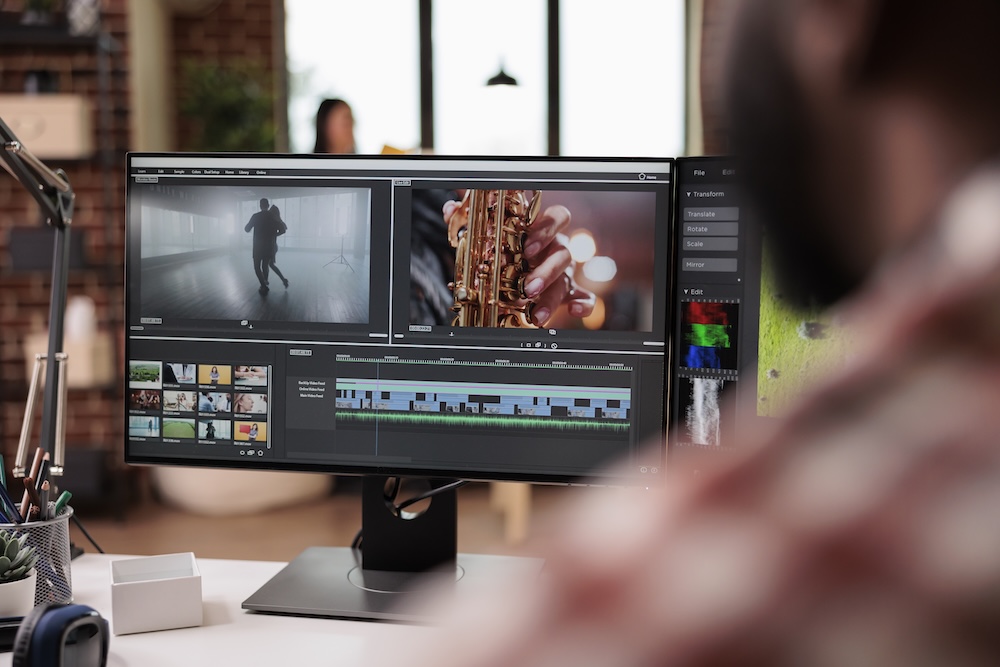
Post-production is usually the longest stage, and the most misunderstood. Most clients expect a quick turnaround after the shoot. The reality of the video post-production process is more layered than that.
It starts with a rough cut assembled from the script and storyboard. From there, the edit goes through iterative rounds focused on pacing, structure, and storytelling. The technical and creative layers build on top:
- Motion graphics, titles, lower-thirds, and visual effects, developed in-house as part of our motion graphics services
- Audio editing covering dialogue clean-up, sound design, music licensing, and voiceover integration
- Colour correction for technical accuracy and colour grading for the artistic look
- Two to three rounds of client review and revision built into the timeline
Once the final cut is approved, post-production extends into distribution. Format and aspect ratio variants are prepared for each platform. Cut-downs and teasers are produced for social and paid media. Captions and accessibility versions are added. SEO metadata is applied to owned channels. Master files and all project assets are archived. This is where the video ultimately starts earning its budget.
Why the Process Matters More Than the Final Cut
A strong final cut is the by-product of a tight process. Not a happy accident, and not something that can be rescued in post if the earlier stages were skipped or rushed.
When any stage is compressed, it shows. Not always in ways viewers can name, but in ways they feel: a pace that drags, a message that doesn’t quite land, a visual style that feels slightly off. The problems are usually invisible in isolation and only obvious in combination.
As a full-service video production house handling corporate videography for Singapore clients and organisations across Southeast Asia, Graphiss runs all three stages in-house with dedicated account servicing. From the first concept conversation to final delivery, one team is accountable for the whole thing. No hand-offs between vendors. No gaps in communication. No one pointing at someone else when something isn’t right.
If you’re planning a corporate event video production, a brand film, or anything in between, get in touch. We’ll walk you through exactly what the process looks like for your project.