Every video project reaches a fork in the road early on, usually before the script is even locked. Do we build the shoot in a studio, where we control everything, or take it into the real world, where we control almost nothing but gain something a studio can’t fake?
Most clients treat this as a practical detail. On our side of the table, it’s one of the decisions that quietly determines whether the finished video works. Get it right and everything downstream runs smoother. Get it wrong and you feel it in the budget, the schedule, and the footage itself.
Here’s how we think it through, so you can have an informed conversation about it before the cameras come out.
Shooting on Location
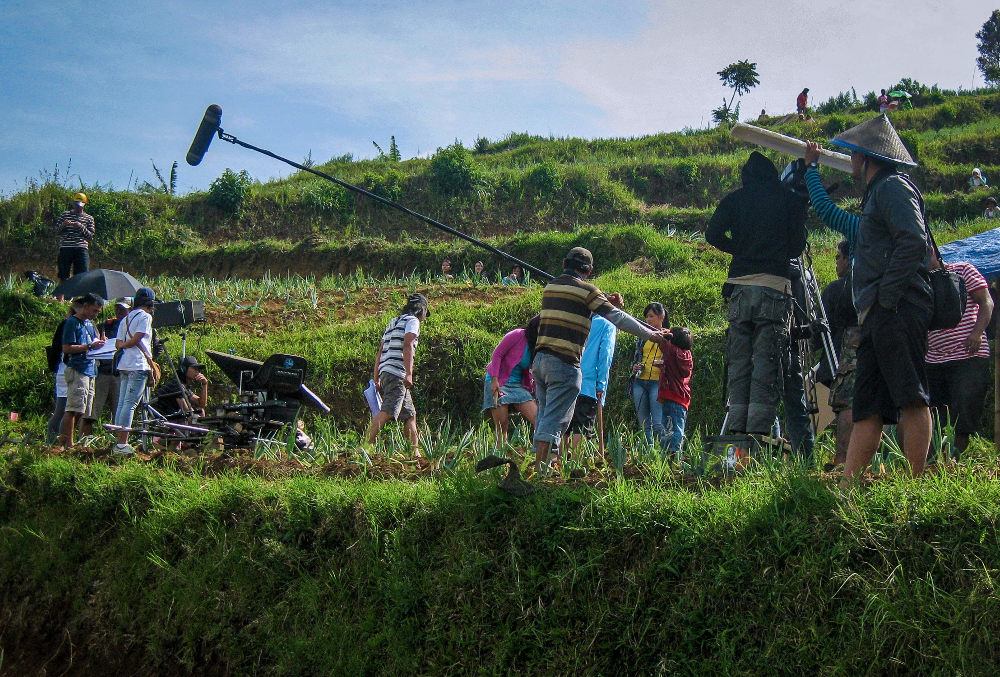
“On location” covers any environment that isn’t a controlled studio. Offices, retail floors, public spaces, event venues, a rooftop at golden hour. Wherever the real world happens to be, that’s where the shoot goes.
The appeal is real, and it’s mostly about authenticity:
- Environments that feel genuine because they are, which is hard to fake on a set
- Visual context that quietly reinforces the brand story without a word of dialogue
- No studio hire to budget for
- Existing production value baked into the space, from architecture to natural light
The trade-offs are just as real, and they tend to show up on the day:
- Lighting shifts as the sun moves, and you’re often working around it rather than commanding it
- Ambient noise has opinions of its own, whether that’s traffic, air-conditioning, or a colleague’s phone
- Foot traffic and weather rarely check the call sheet first
- Setups take longer, and moving crew and equipment between spaces eats into the schedule
Location tends to be the obvious call when the real world is the point. Event coverage lives or dies on being there. Testimonials land harder in someone’s actual workplace. Behind-the-scenes content only works when it looks lived-in. Any video where real-world credibility carries the message belongs on location.
Studio Filming
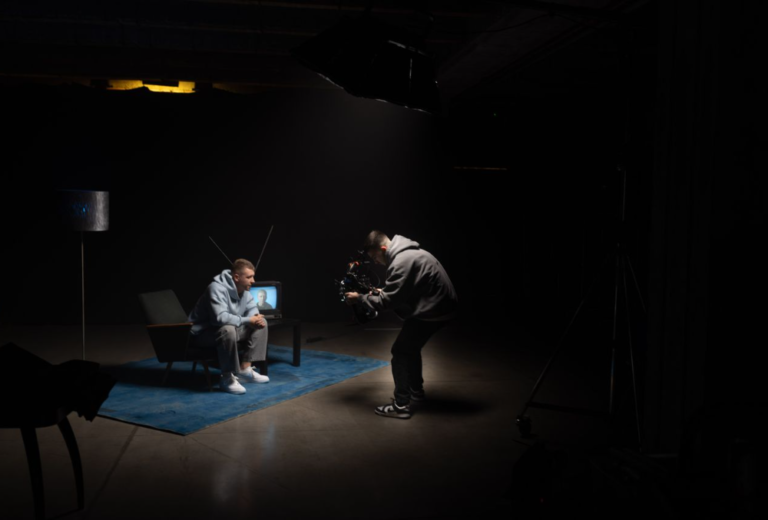
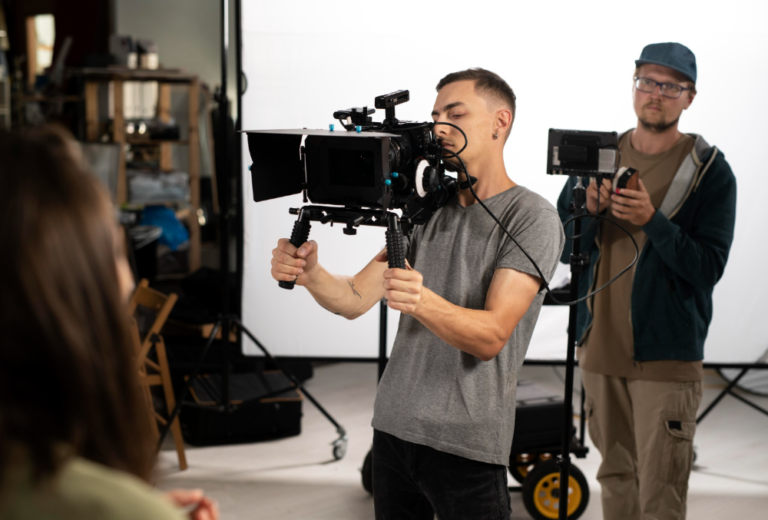
Studio filming flips the equation. Lighting, sound, backdrop, and staging all sit within our control, which means the environment does exactly what we tell it to and nothing we didn’t ask for.
That control buys a lot:
- Consistency across a full shoot day, so the last take matches the first
- No environmental surprises to work around or wait out
- Faster setups for talking-head formats, since the room is already dialled in
- The freedom to build looks that don’t exist anywhere in the real world
It comes with its own compromises:
- Studio hire is a fixed cost you’re carrying from the start
- A space that isn’t dressed with care can read as sterile or generic on camera
- Contextual authenticity has to be created rather than captured
Studio is usually the right home for product launches, corporate talking heads, green screen work, and anything feeding into motion graphics. When a shoot demands precise technical control, the studio is where that control lives.
What Is the Difference Between Location and Studio Shooting?
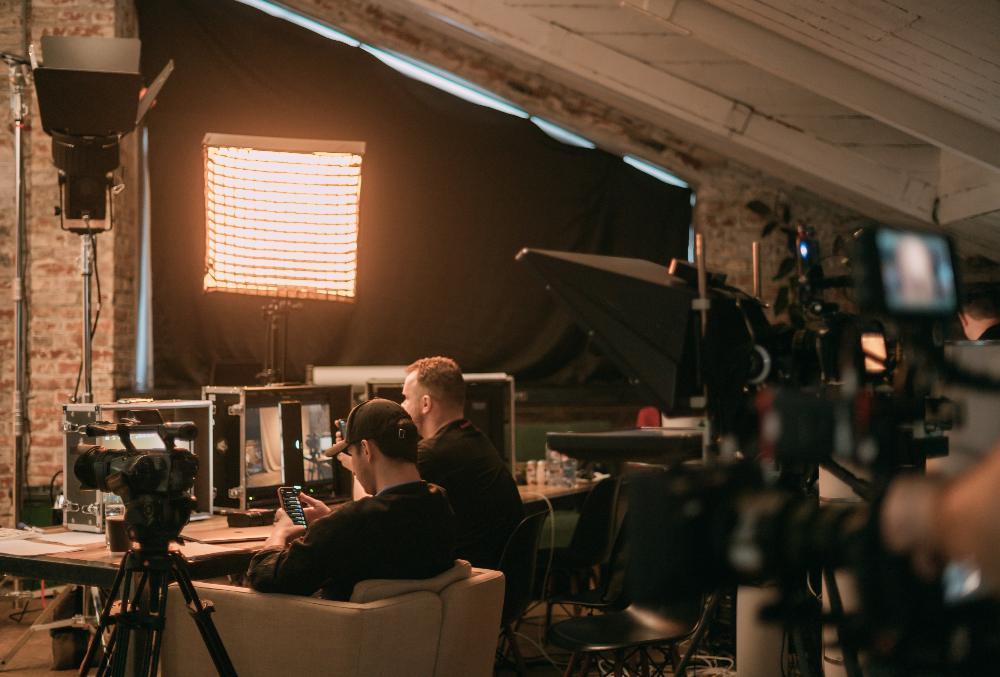
It helps to treat these as two different tools rather than a ranking. Neither is inherently better. One hands you control, the other hands you context, and the right choice depends entirely on what the brief is asking for. Here’s how they compare across the factors that actually move a production.
| Factor | Shooting on Location | Studio Filming |
| Creative control | Limited, you work with the environment you’re given | High, the environment works for you |
| Cost | Variable, with hidden extras like permits and travel | Predictable, studio hire is a fixed line |
| Scheduling flexibility | Exposed to weather, access, and daylight | Precise, planned to the hour |
| Authenticity | Built in, real spaces read as real | Created, needs careful set dressing |
| Technical requirements | Adapt to the space on the day | Full command of light, sound, and staging |
| Suitability by video type | Events, testimonials, behind-the-scenes | Talking heads, product launches, green screen |
| Risk factors | Noise, foot traffic, unpredictable conditions | A sterile look if the space isn’t dressed well |
In practice, plenty of video production house use both. We’ll shoot the controlled interview segments in a studio, then head out on location for the cutaways and b-roll that give the film texture. Splitting the work across both environments is often the smartest use of a budget rather than a compromise on either.
Key Considerations for Your Production
There’s no formula that spits out the answer. What there is, is a short list of factors we weigh on every project, and the balance between them shifts each time. These are the ones that matter most:
- Budget: Location can trim studio hire from the quote, then quietly add it back through permits, travel, and extended shoot days. Studio fees are more predictable from the outset. Neither is automatically cheaper, and it always depends on what the location demands.
- Script Requirements: When the script calls for a specific setting that reinforces the message, location is usually non-negotiable. When the environment is irrelevant to the story, a studio gives more creative latitude without the distraction.
- Schedule: Studio filming can be planned to the hour and are far less exposed to delays. Location shoots need contingency time built in, because weather, access, and ambient noise are all variables no production team fully controls.
- Logistics: This is where clients tend to underestimate the real cost. Crew size, equipment transport, parking, power access, and the hours lost moving between setups all add up on location. A studio consolidates the lot into one address.
- Creative Vision: When everything else is even, this is the deciding factor. Ask what the video needs to feel like, grounded and real, or clean and controlled. The environment the crew works in shapes the emotional register of the finished piece more than almost any other single decision.
The Right Choice Is the One That Serves the Story
There’s no universally correct answer here, and anyone who tells you otherwise is selling something. There’s only the right answer for a specific brief, a specific budget, and a specific creative intent. A studio that’s perfect for one project would flatten another. A location that lifts one film would sink the next under logistics it never needed.
The framework is simpler than it looks. Let the script, the budget, and the tone you’re after lead the conversation, rather than habit or whatever worked last time. Get those three talking to each other early and the environment usually chooses itself.
This is the kind of decision we work through deliberately on every project, long before anyone books a space or scouts a site. It’s part of what our corporate video services are built around: getting the thinking right before the cameras roll. If you’ve got a brief taking shape, bring it to us and we’ll work through it together, and figure out which environment actually serves the story you’re trying to tell.